
Skip to content

Foundation repair service · Alabama

Foundation Crack Repair in Alabama

Slab cracks, stair-step cracks in brick and block, and cracks in poured walls: what usually matters, how each is repaired, and what it costs.

Free referral to a participating independent contractor. No obligation.

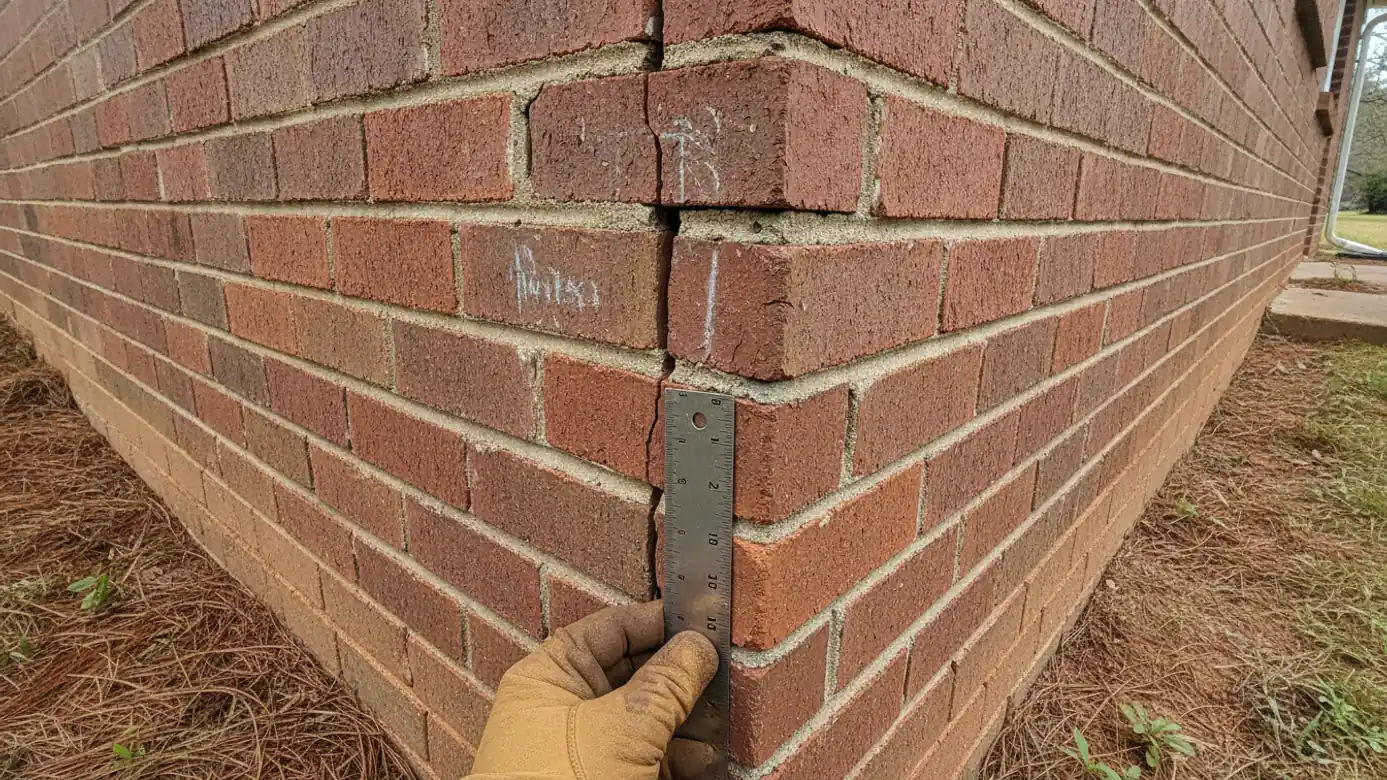
Close view of a stair-step crack through the mortar joints of red brick veneer on an Alabama house
Fig. 1Illustrative photo. Close view of a stair-step crack through the mortar joints of red brick veneer on an Alabama house.

Last updated: 2026-10-12

Alabama Foundation Repair connects Alabama property owners with participating contractors for foundation crack repair. Most Alabama houses are brick veneer over a slab or crawl space, so the cracks people notice first are often in the brick outside or the slab inside, not a basement wall. Some of those cracks are harmless shrinkage. Others are the first visible sign that the house is moving. Telling them apart takes an on-site look.

Where Alabama homeowners find foundation cracks

Where the crack is matters as much as what it looks like. These are clues for a contractor, not a diagnosis:

  • Brick veneer: stair-step cracks following the mortar joints, often below windows or at corners, can point to settlement under that part of the house.
  • Slab floors: thin, random cracks under carpet or tile are common shrinkage. Cracks with one side higher than the other, or that keep widening, suggest movement. See slab foundation repair.
  • Crawl space piers and walls: cracked or leaning masonry piers and stem walls under older houses. See crawl space structural repair.
  • Basement walls: vertical cracks in poured walls are often shrinkage; horizontal cracks in block walls usually mean soil pressure and need prompt attention.
  • Interior drywall: diagonal cracks off door and window corners often travel with foundation movement.

Crack direction and width

Vertical and hairline cracks in poured concrete are usually from shrinkage as the concrete cured. Diagonal, stair-step, and horizontal cracks are more often tied to movement or pressure. Width and change over time matter more than length: a crack that is wider at one end, offset, or growing deserves a closer look. Our guide to horizontal vs. vertical foundation cracks goes through each pattern.

How foundation cracks are repaired

The repair depends on the material and on whether the crack is still moving:

  • Epoxy injection bonds a stable crack in poured concrete and restores some strength across it.
  • Polyurethane injection seals a leaking crack with flexible foam.
  • Repointing replaces cracked mortar in brick and block; badly displaced sections may be rebuilt.
  • Carbon fiber or steel reinforcement across cracks in basement walls.
  • Fixing the cause first: if a crack comes from settlement, sealing it alone will not last. That means settlement repair or piers before the cosmetic work.

Watch it before you patch it

For a thin, dry crack, watching is reasonable. Mark both ends with a pencil and the date, photograph it beside a ruler, and check again after a few months and after a long dry spell, since Alabama clay moves most between wet and dry seasons. Do not caulk or paint over a crack before a contractor sees it; that hides whether it is still moving.

When a crack is worth a professional look

  • It is horizontal, or the wall around it leans or bows.
  • It is wider than about a quarter inch, or wider at one end.
  • One side sits higher than or out of line with the other.
  • It has grown since you marked it.
  • It showed up along with sticking doors or sloping floors.
  • Water comes through it.

These are reasons to get the house looked at, not a diagnosis. Some have harmless causes.

What foundation crack repair costs

HomeAdvisor's June 2026 data puts sealing foundation cracks at $250 to $800. If the crack is a symptom of settlement, the cause has to be repaired too: piers run $1,000 to $3,000 each and settling-foundation repairs $5,000 to $25,000. Leak repair and waterproofing run $2,000 to $7,000.

  • Number and length of cracks.
  • Material: poured concrete is usually injected; brick and block may need repointing or rebuilding.
  • Access: finished walls, flooring, or tight crawl spaces add labor.
  • Whether the cause needs repair as well.

Source: HomeAdvisor cost data, updated June 2026. National ranges, not quotes. Comparing quotes? Try the quote comparison tool.
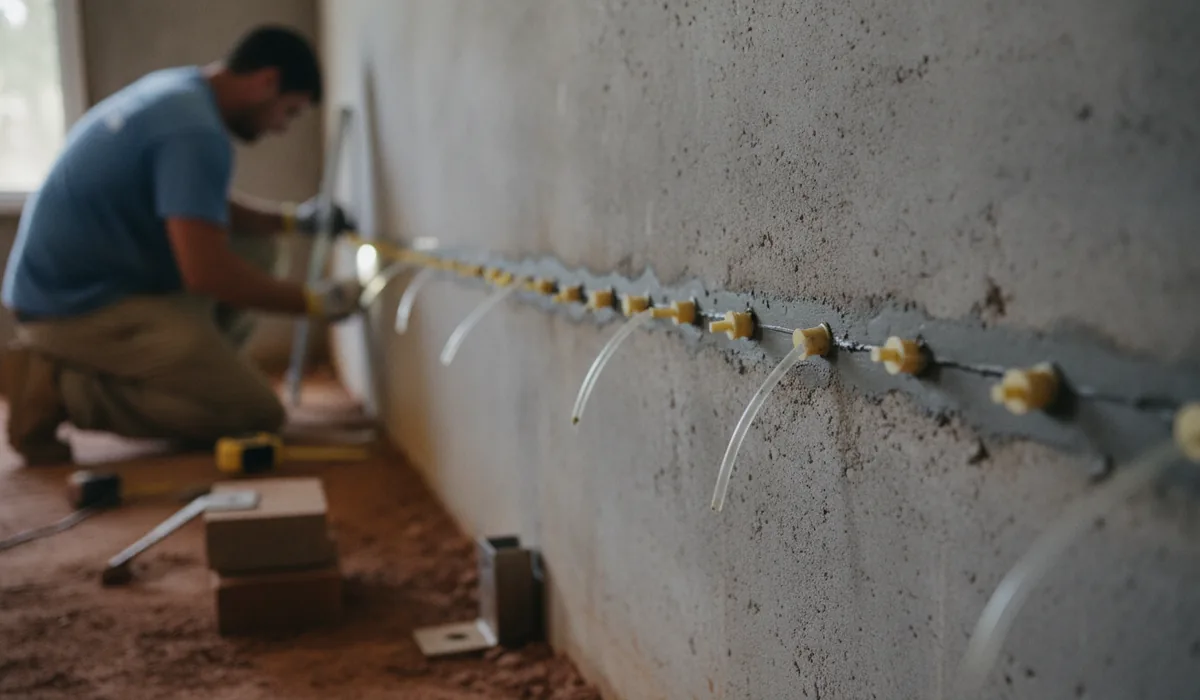
Polyurethane injection ports along a sealed crack in a gray poured concrete foundation wall
Fig. 2Illustrative photo. Polyurethane injection ports along a sealed crack in a gray poured concrete foundation wall.

When a crack calls for an engineer

Most single cracks do not need an engineer. A horizontal crack with a bowing wall, cracks that keep growing after a repair, or crack patterns that two contractors read differently are good reasons to pay for an independent structural engineer's assessment, which HomeAdvisor puts at $340 to $780. See when to hire a structural engineer.

What you can do right now

  1. Photograph the crack with a ruler or coin for scale, and date it.
  2. Mark both ends in pencil so you can tell if it grows.
  3. Note whether it leaks after rain.
  4. Leave it unfilled until a contractor sees it.
  5. Call and describe the crack: where it is, its direction and width, the material, and any water.

Questions to ask about crack repair

  • Is this crack from shrinkage or movement, and how can you tell?
  • Is it still moving?
  • Which repair material, and why that one for this crack?
  • If the crack is a symptom, what would fix the cause, and what would that cost?
  • What does the warranty cover if it reopens or leaks?

Related foundation repair guides

Straight answers

What you can do now vs. when to get a professional evaluation

Watching, measuring, and fixing drainage are jobs for a homeowner. Diagnosing the cause and repairing structure are not.

What you are seeingWhat you can do nowWhen to get a professional evaluation
A thin crack in a slab or poured wallPhotograph it beside a ruler, mark the ends in pencil with the date, and recheck after a dry spell and after heavy rainIt widens, one side sits higher, or water comes through
Stair-step cracks in brick or blockPhotograph and date them; note any doors or windows nearby that stickThey are growing, or bricks or blocks have shifted out of line
Floors sloping or bouncing over a crawl spaceFrom the access opening, look with a flashlight for standing water, leaning piers, or soft woodIt is getting worse, or supports look cracked, sunken, or rotted
Cracks that open in summer and close in winterKeep gutters and grading sending water away; date photos across seasonsThey get wider each year, or one area keeps dropping
A basement or retaining wall leaning inwardKeep the area clear; do not try to push or brace it yourselfAlways: horizontal cracks and inward lean are a structural question
A depression or hole near the houseKeep people and pets away; on public land or a road, report it to local officialsAlways. Call 911 if a building is moving or anyone is in danger

General guidance, not a diagnosis. For sinkholes, the Geological Survey of Alabamaadvises securing the area, contacting your insurer, and hiring a geologist or engineer. Never jack, cut, or remove a structural support yourself.

The process

What crack repair usually involves

Every house and every foundation problem is different. These are the stages most projects follow.

  1. An on-site evaluation

    The contractor looks at cracks, floors, doors, the crawl space or slab, and the drainage around the house, and may measure how far floors are out of level. Symptoms alone do not tell anyone the cause; the visit is where that starts.

  2. A written plan and price

    Ask for the proposed repair, why it fits the cause they found, the number and location of any piers or supports, any permit, and the price in writing. In Alabama, a residential job over $10,000 needs a Home Builders Licensure Board license and a written contract.

  3. An engineer, when the situation calls for one

    For large movement, a sinkhole, possible mine ground, a home sale, or contractors who disagree, an independent licensed structural engineer can assess the cause and specify the repair. Contractors are not engineers unless they are licensed as one.

  4. The repair

    Depending on the cause: piers or underpinning, slab lifting, crack injection or masonry repair, crawl space supports, or drainage changes. Ask how long it will take and what access the crew needs.

  5. Warranty and paperwork

    Get the warranty in writing: what it covers, for how long, and whether it transfers to a buyer. Keep the plan, invoice, permit, and any engineer report together; buyers and inspectors ask for them.

How it works

How our contractor-matching service works

(205) 859-3946
  1. You call the number on this site

    Have the property address or ZIP code ready, and describe what you are seeing: cracks, sloping floors, sticking doors, a leaning wall, and how long it has been going on.

  2. Your call is routed to a participating contractor

    Your call is connected with a participating independent foundation repair contractor who serves your area, if one is available. We do not inspect anything or send anyone ourselves.

  3. You deal with that contractor directly

    The contractor evaluates the house, recommends a repair, quotes the price, and does any work you agree to under their own business name, license, insurance, and warranty. You decide whether to hire them. There is no obligation.

Good to know: availability and eligible services depend on which participating contractors cover your ZIP code. Whoever you hire, ask for their Alabama Home Builders Licensure Board license number on any job over $10,000, and check it at hblb.alabama.gov.

Questions

Foundation Crack Repair: common questions

Are foundation cracks serious?

Many are not. Hairline vertical cracks in poured concrete and thin random slab cracks are often shrinkage. Horizontal cracks, stair-step cracks in brick or block, cracks wider at one end, and cracks that keep growing are more likely to signal movement and deserve a professional evaluation.

How much does foundation crack repair cost in Alabama?

HomeAdvisor's June 2026 data puts crack sealing at $250 to $800. If settlement caused the crack, fixing the cause costs more: piers run $1,000 to $3,000 each. Alabama prices depend on the material, access, and number of cracks.

Why does my brick have stair-step cracks?

Stair-step cracks follow the mortar joints and are often linked to part of the foundation settling under that wall. Brick can also crack from thermal movement or a failing lintel over a window. A contractor checks whether the foundation below has moved.

Can I fix a foundation crack myself?

You can monitor it and keep water away from the house. Sealing a crack yourself can hide whether it is still moving, and a crack caused by settlement needs the cause addressed by a qualified contractor. Have it looked at before you fill it.

Get Foundation Crack Repair Help

Call and we will try to connect you with a participating independent foundation repair contractor who serves your part of Alabama. No obligation to hire.

Call (205) 859-3946

Free referral. Availability varies by ZIP code.

Call (205) 859-3946 · Foundation Repair Help